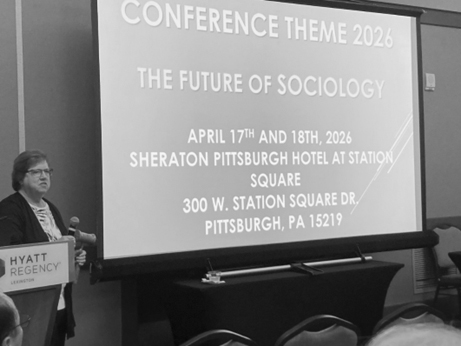
The 2026 Annual Meeting of the North Central Sociological Association
Conference Theme
“The Future of Sociology”
April 17th and 18th, 2026
Sheraton Pittsburgh Hotel at Station Square
300 W. Station Square Dr.
Pittsburgh, PA 15219
Click here to download a PDF copy of this page (updated 10/23/25)
We are extending out the paper submission deadline to 11:59pm December 8th
NCSA 2026 Annual Meeting Conference Theme
The Future of Sociology
Public confidence in core institutions is at historically low levels. There is pervasive distrust of empirical evidence, and a backlash against knowledge-producing and knowledge-disseminating activities such as we pursue in academia.
According to Gallup, a majority (68%) of Americans now believe that higher education is headed in the wrong direction. Little more than a third (36%) express a high level of confidence in U.S. colleges and universities, down from 57% only a decade ago. Among those survey respondents who say that they have very little confidence in higher education, the most frequent reasons given are related to “political agendas,” followed by “wrong focus/teaching the wrong things” and “cost/expenses.”
Sociology has not been immune to these trends. In the current national climate, a number of actors and institutions are strongly anti-sociological in focus and actions around issues we claim as central to our discipline. Our enrollments have been falling. Departments are being shuttered and programs discontinued. In some places, politicians have moved to ban the teaching of sociology altogether.
The field of sociology, as well as the larger academy, should rightfully defend itself against unfair attacks. But it is also important that we take any valid criticisms seriously—such as a need for a better pipeline from a sociology degree to a job, concerns about a lack of viewpoint diversity in the field, the need for better and more rigorous graduate preparation, flaws in the peer review process, and more. We urgently need to determine how to address these criticisms in order to build a vibrant sociology that survives and thrives for years to come. This will make our discipline healthier and more sustainable and hopefully reverse enrollment declines. It is no guarantee that it will slow political attacks, but if it helps restore the public’s confidence in us then it may make it more difficult for politicians to unfairly target us.
So, what is the future of sociology? Which criticisms are valid? What should be done to address them? How do we reorient sociology so that it is stronger and more sustainable in the long term? In short: where should sociology go from here?
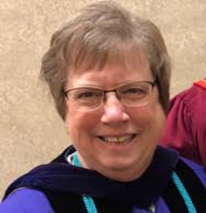 President Barbara Jones Denison
Shippensburg University (emeritus)
NCSA President, 2025-2026
NCSA 2026 Annual Meeting
FEATURED SPEAKERS
2026 Ruth and John Useem Plenary Address
Rigor or Ruin: Sociology’s Reckoning Has Arrived
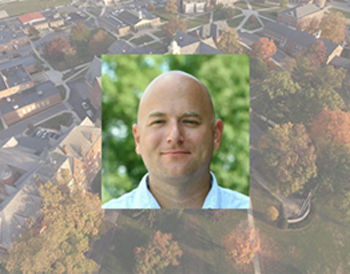
Lawrence Eppard, Associate Professor of Sociology and Director of the Connors Institute for Nonpartisan Research & Civic Engagement at Shippensburg University (ConnorsInstitute.org). He has published several books, including The Poisoning of the American Mind, Virtuous Nonsense: Progressive America’s Epistemic Crisis, Seeing America Clearly: Heterodox Reflections on Current Issues, Poorly Understood: What America Gets Wrong About Poverty, On Inequality and Freedom, and Rugged Individualism and the Misunderstanding of American Inequality. He is also the host of the Connors Institute’s Utterly Moderate Podcast and regular contributor to their Substack the Connors Journal.
2026 John F. Schnabel Award Winner-Address
Teaching with Hope: A Sociological Approach to Dark Times
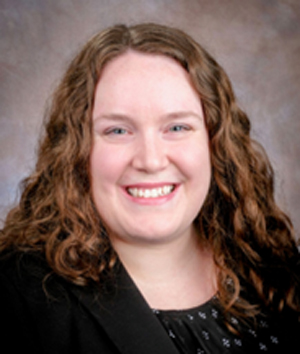
Colleen Wynn is an Associate Professor and Chair of Sociology at the University of Indianapolis. She is also the Co-Director for the Community Research Center (CRC) housed in the Department of Sociology at the University of Indianapolis.
Originally from Louisville, KY, she holds a Ph.D. in sociology from the University at Albany, SUNY, and a Master of Arts and a Bachelor of Arts degree in Sociology from Western Kentucky University.
Her research interests include urban sociology, families and households, demography, and housing. Her teaching interests include introductory sociology, research methods, urban sociology, family sociology, and demography.
TYPES OF SESSIONS
 Length – All sessions last 75 minutes.
Topic Session: A topic session is designed for presentations and discussions focused on a specific subject. A thematic session refers to a session that is specifically oriented toward the conference theme.
Closed Session: A closed session requires an organizer to selects a topic and format. The organizer will recruit all the participants for this type of session. A closed session may be of any format.
Academics-Meet-Activists: Academics-Meet–Activists sessions are closed sessions. An organizer recruits an activist or organization as well as academics to discuss the intersections of academic research and activist initiatives as they relate to a specific social movement or social justice issue.
Author-Meets-Critics: Author-Meets-Critics are closed sessions. An organizer recruits an author of a recently published book, article or chapter and 2 to 4 critics to participate in a discussion about the significance of the work to the sociological field.
Panel: Panels are closed sessions. An organizer recruits subject-area experts to discuss a topic. Panelists’ brief presentations are followed by discussion between the speakers and a Q&A facilitated by the organizer.
Paper: Paper sessions may be closed or open. Paper sessions consist of three to five presentations that revolve around a common theme. Conference organizers will place papers with a common theme into a session.
Workshop: Workshops are interactive, hands-on closed sessions designed by organizers to develop specific professional competencies through interactive activities and discussions. The skills and tools presented in the session should be clear and have high utility for the workshop attendees.
Undergraduate Paper Presentations: These are open sessions designed for undergraduate students to present their research. Please see the “Undergraduate Paper Presentation Submissions” section for more information.
WHAT TO SUBMIT
Individual Paper – Research
If you want to present or discuss your ongoing or completed research project, submit it as an individual research paper. The program committee will organize the individual submissions into coherent sessions. Include a title and a brief abstract (no more than 150 words) in your submission. Please indicate the general topic that best fits your submission (see list on page 7). If your submission does not fit any of the general research topics, choose the “RESEARCH: other” option. For questions and more information contact Ashley Hutson at afeely@butler.edu.
Individual Paper – Teaching
If you want to give a presentation on a teaching topic, submit it as an individual teaching paper. The program committee will organize the individual presentations into coherent sessions. The program committee will organize the individual submissions into coherent sessions. Include a title and a brief abstract (no more than 150 words) in your submission. If your submission does not fit any of the general teaching topics, choose the “TEACHING: other” option. For questions and more information please contact Greg Kordsmeier at gkordsme@iu.edu.
Closed Session – Research or Teaching
If you are interested in proposing and organizing a closed session, submit the title of the session, a brief abstract for the session (no more than 150 words), and the names and emails of all the participants. If the session consists of papers, submit the titles of everyone’s presentation and a brief abstract for each presentation (no more than 150 words). For questions and more information please contact Gail McGuire at gmcguire@iu.edu (research sessions) or Greg Kordsmeier at gkordsme@iu.edu (teaching sessions).
SUBMITTING PROPOSALS
All submissions (except undergraduate papers) must be completed and received by the NCSA no later than 11:59pm EST on December 8, 2025.
- Review the suggested topics for submissions found in this prospectus to determine if your submission should be considered a research or teaching proposal AND which topic the program committee should consider when assigning your presentation to a session. We make every effort to schedule sessions of the same or similar topic at different times, so they do not conflict with each other.
- For individual research or teaching papers, submit information online here. Please have on hand all the information required for the submission (see “What to Submit”). We welcome abstracts for ongoing or completed projects. We do not collect finished papers.
- For closed sessions, submit information online here Please have the closed session submission form completed and ready to upload when you submit the proposal (see “What to Submit”).
UNDERGRADUATE PAPER PRESENTATION SUBMISSIONS
 The NCSA welcomes the participation of undergraduate students. For more than a decade, undergraduate students have presented their work at the NCSA conference. Undergraduate presenters must register for the conference as a UG registration WITH membership. Conference registration includes student membership benefits and access to the entire annual meeting.
The submission deadline for undergraduates is January 5, 2026. Please include the author(s)’ first and last names, institutional affiliations, most frequently checked email, and an abstract up to 150 words. Undergraduate submissions will be placed in a topic-relevant session in one of the organized Undergraduate Sessions. For questions regarding undergraduate student participation in the conference, contact Mellisa Holtzman at mkholtzman@bsu.edu.
Proposal Submission Links
Research and Teaching Paper Submissions – Get Started
Closed Session Submissions – Get Started
Undergraduate Paper Submissions – Get Started
RESEARCH TOPICS FOR SUBMISSIONS
Aging and the Life Course
Animals and Society
Applied Sociology
Children and Youth
Collective Behavior and Social Movements
Community Based/Participatory Research
Crime and Deviance
Disability
Education
Environmental Sociology
Family
Food
Gender and Sex
Global and Transnational Sociology
Health and Medical Sociology
Historical & Comparative Sociology
Immigration & Migration
LGBTQIA+ Studies
Media Studies
Methods
Politics
Popular Culture
Poverty
Race and Ethnicity
Religion
Rural Sociology
Social Justice and Human Rights
Social Stratification
Sociology of Sport
Theory
Urban Sociology
Work and Occupation
RESEARCH: Other
TEACHING TOPICS FOR SUBMISSIONS
Active Learning/Student Centered Learning
Assessment of Learning
Capstone Projects–Best Practices
Challenges in Teaching
Choosing Textbooks and other Course Materials
Community College Instruction
Community Engagement and the Classroom
Curriculum Design
Equity and Inclusion in the Classroom
Ethics and the Classroom
Group work–Benefits and Challenges
High Impact Practices
Innovative Teaching
Mentoring Retention Strategies
Service and Project–based Learning
Student Writing
Teaching Difficult Topics
Teaching Large Classes
Teaching Online Classes
Teaching Sociology through Film/Media/News
PRESENTER POLICIES
Participating in a conference program should inspire pride in one’s work. With that professional pride comes professional responsibilities. Among those responsibilities are paying NCSA membership and conference registration fees and informing the program committee if one is unable to take part in the conference after being accepted onto the program.
Please take a moment to review the following policies before you submit a proposal to ensure that you are adequately prepared for your presenter role/s:
PARTICIPANT APPEARANCE LIMITS & SCHEDULING REQUESTS
- An individual may be listed on the program no more than two (2) times per annual meeting unless they have the permission of the Program Chair, Gail McGuire.
- Scheduling requests must be made by December 20, 2025.
ACCEPTANCE OF PROPOSAL INTO THE FINAL PROGRAM
- The lead author of a proposal will be notified via email of their proposal’s status prior to January 20, 2026.
REGISTRATION REQUIREMENT
All attendees, presenters, organizers and speakers are required to pay the conference registration fee. Registration for the conference includes one year of membership in the NCSA.
Conference fees help to pay for the venue and all related services as well as fund NCSA’s operating expenses throughout the year. NCSA seeks to keep costs to a minimum and thus affordable to as many people as possible.
- Registration Requirement: All program participants are required to register for the conference; registration for the conference includes one year of membership in NCSA.
- Non-Presenting Co-Authors: Non-presenting co-authors are not required to register if they are not attending the conference. However, if they attend the conference, they are required to register for the conference and pay the applicable fees.
- Registration Deadline: All program presenters must register for the conference no later than thirty (30) days prior to the first day of the conference. Those that do not register (30) days prior to the first day of the conference will be removed from the final program. Paid registration is required to access all sessions.
- Receipt: We recommend every attendee save the emailed receipt as their record of registration. Have a copy with you when checking in at the association conference desk in case of questions.
- Cancellations: NCSA’s policy is that any registration may be canceled without penalty up to thirty (30) calendar days prior to the first day of conference. The requirement of registration fees helps to guarantee the presence of presenters listed in the final program. This policy hopes to reduce the number of last-minute drops and no-show presenters, thus greatly increasing the quality of the program for all attendees.
PRESENTATION CANCELLATION AFTER ACCEPTANCE INTO THE PROGRAM
- Cancellations: To cancel, presenters should notify the Program Chair, Gail McGuire by email [gmcguire@iu.edu] as soon as possible. Cancellations must be received at least thirty (30) calendar days prior to the first day of the conference. If you do not attend the conference without canceling, you are still responsible for paying registration fees.
- Substitute Presenters: If you are unable to present, but a co-author is available, contact the Program Chair, Gail McGuire at gmcguire@iu.edu with the name of the presenter so that the session is not removed from the program.
- Refunds: All cancellations that qualify for a refund will be credited through a refund check payment or credit to the card used to make the original payment.
- Last Minute Cancellations: We understand that unforeseen events outside of a presenter’s control (e.g., medical issues, family emergencies, and unforeseen travel problems) may prevent them from presenting as scheduled. In these situations, email Gail McGuire at gmcguire@iu.edu, so that we can remove you from the program. Conference registration refunds will be evaluated on a case-by-case basis.
No Shows: Presenters who do not attend their scheduled session and/or do not notify the Program Chair, Gail McGuire [gmcguire@iu.edu], will be considered a ‘no show.’ Registration fees for ‘no shows’ are not refundable. Failure to give scheduled presentations without adequate notice is disruptive and leave gaps in the conference program. This diminishes the experience of conference attendees.
REFUNDS
A processing fee and the 2026 membership dues will be deducted from any refunds made. All refund requests must be made by the attendee or credit card holder. Refund requests must include the name of the attendee and/or transaction number. Please let us know if you would like to donate your registration fee in lieu of a refund. For payments received by credit or debit cards, the same credit/debit card will be refunded. Refunds will not be available for registrants who choose not to attend the conference.
Refund requests must be submitted via email to Anjel Stough-Hunter at stoughhunter@capital.edu.
CONFERENCE DETAILS
Conference Contacts
General program questions: Gail McGuire, gmcguire@iu.edu
Special format sessions: Gail McGuire, gmcguire@iu.edu
Research sessions: Ashley Hutson at afeely@butler.edu
Teaching sessions: Greg Kordsmeier, gkordsme@iu.edu
Undergraduate papers: Mellisa Holtzman, mkholtzman@bsu.edu
Registration questions: Anjel Stough-Hunter, astoughhunter@capital.edu
Hotel/conference arrangements: Erin Baker Geise, ebakerNCSA@gmail.com
Important Dates
Aug 19, 2025 Online portal opens for all submissions
Dec 8, 2025 Deadline for all submissions EXCEPT undergraduate presentations
Jan 5, 2026 Deadline for undergraduate presentation submissions
Jan 25, 2026 Target date for 2026 preliminary session list to be posted online
March 25, 2026 Reservation for hotel room block closes
March 25, 2026 Early conference registration closes
HOTEL REGISTRATION LINKS
Book with Sheraton
Our conference hotel is the Sheraton Pittsburgh Hotel at Station Square. We have secured a block of rooms for the evenings of Thursday, April 16 through Sunday, April 18 at the rate of $179 per night plus 14% tax. Room rates are guaranteed through March 18, 2026, or until the room block is fully reserved. For those driving to the conference, parking is available at the hotel, there is parking at the hotel for a $34 surcharge. The Sheraton is a smoke-free hotel. Smoking is not allowed within hotel guest rooms, restaurants, meeting rooms, or any public area. There are designated smoking areas along the perimeter of the hotel property. Online reservation lines will open December 1, 2025.
Book your group rate for North Central Sociological Association
You will find the information for your online reservation link below. If you have questions or need help with the link, please do not hesitate to ask. We appreciate your business and look forward to a successful event.
Event Summary:
North Central Sociological Association
Start Date: Wednesday, April 15, 2026
End Date: Sunday, April 19, 2026
Hotel(s) offering your special group rate:
- Sheraton Pittsburgh Hotel at Station Square for 179.00 USD per night – Last Day to Book : Wednesday, March 18, 2026
Book your group rate for North Central Sociological Association
REGISTER FOR THE CONFERENCE
All program participants must be NCSA members and register for the conference unless otherwise notified. You may pay your 2026 membership dues and conference registration fees in one simple payment step any time between December 1 and March 5. Fees for the 2026 conference INCLUDE your 2026 membership dues. Late and/or onsite registration fees are higher. Fees for 2026 remain the same as 2024. In 2022, we introduced a tiered professional registration structure. For more information on this year’s fees, please visit our conference registration page. Online registration will open December 1, 2025.
AV RESOURCES
Unless prior arrangements are made with the session presider, presenters should bring their laptops loaded with their presentation on the desktop and saved to a Flash Drive. We encourage panels to upload their presentations to the presider’s laptop to facilitate speedy transitions. If presenters choose to use their personal laptops instead of the presider’s, they are responsible for supplying an HDMI adaptor compatible with their device.
Breakout rooms will contain a projector and screen unless the format type prohibits the use of technology.
SAFE SENDER LIST
Please add the following email addresses to your safe senders list to ensure you receive conference updates and requests: gmcguire@iu.edu, ebakerNCSA@gmail.com, and stoughhunter@capital.edu